The Jubilee 2015 - Explained with 10 Questions
1. What is the Jubilee?
In the most simple definition, the Jubilee is a Holy Year for the remission of sins. The word "jubilee" comes from the Hebrew word "yobel", indicating the goat horn whose sound opened, every 50 years, a special year for the Jews: it was the year in which slaves were let free. For the Catholic Church, the Pope in this year's grants indulgence which is the forgiveness of sins to the faithful who go to Rome and perform certain practices. The first Jubilee was oficially announced in the year 1300 by Pope Boniface VIII.
2. What is the difference between an ordinary and an extraordinary jubilee?
The ordinary jubilee is celebrated every 25 years, a range established by Pope Paul II. Previously, it was celebrated every 100 or 50 years. Now, Pope Francis has announced an extraordinary Jubilee. The same was done by John Paul II in 1983.
3. What are the three "features" that identify a Holy Year?
These are the Jubilee indulgence, the pilgrimage (in Rome, or in other places, and the Holy Door.
4. What is the jubilee indulgence?
This is granted the Jubilee to the faithful who follows certain behaviors. An indulgence is a remission of the temporal punishment for sins already "forgiven" by God through confession. The temporal punishment is the "moral disorder" that remains within us after confession and makes us unable to open ourselves fully to the Grace thus motivates us to purify ourselves during our lifetime and perhaps even in our afterlife, in Purgatory. An indulgence can be partial (which is only one step in the process of purification) or plenary, total (which is that of the Jubilee).
5. What is the pilgrimage to Rome?
A pilgrimage is a journey of repentance and preparation for the inner renewal that the faithful makes in the footsteps of Jesus. It is also a "material" route: to receive indulgence one must go to Rome and travel to one of the patriarchal basilicas (St. Peter, St. John Lateran, St. Mary Major, St. Paul Outside the Walls, and other places) where the pilgrim must attend Mass or a liturgical celebration, or the pilgrim is expected to stay for some time in adoration before the Eucharist and meditate by following a path of prayer. Only the pilgrimage, however, is not sufficient or necessary to ensure the indulgence. First of all the faithful must want indulgence, then he or she must be in a state of grace thus must have completely detached from sins, then the faithful should confess, and take part in communion and pray according to the intentions of the Pope. Last but not least, the pilgrim has to make an "accomplishment"; a work of mercy that can be done anywhere, such as a visit to those who are suffering, lonely or in trouble.
6. How many pilgrims are expected to arrive in Rome?
A prediction made shortly after the announcement of Pope Francis stated about 30 million pilgrims!
7. What is the Holy Door?
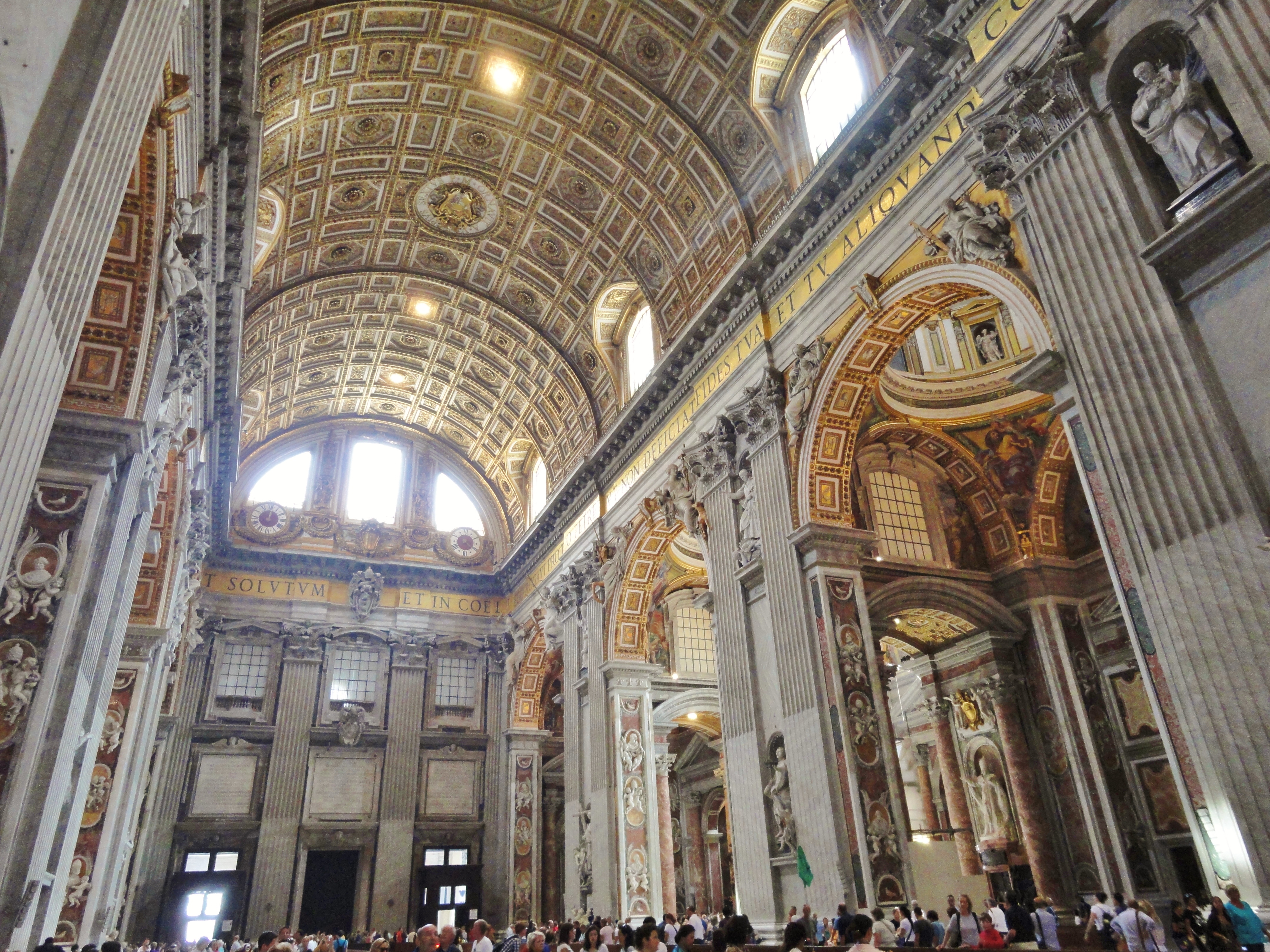
On 8 December 2015, the Holy Door in the Basilica of Saint Peter will be opened; this will officially initiate the Holy Year. The Gate is the symbol of the passage that every Christian should follow from sin to grace, thinking of Jesus who states "I am the door" (John 10: 7). The Holy Year will end on November 20, 2016 with the closure of the Holy Door.
8. What happens now that the Pope has announced the jubilee?
The program for the jubilee has without doubt already begun. The Pope has entrusted the organization of the Jubilee to the Pontifical Council for the New Evangelization, chaired by Archbishop Rino Fisichella. The "bolla" has also been announce. This is the document with which the Pope explains the "motivation" of the Jubilee and also makes notes any special rules for indulgence .
9. What will the Holy Year will feature for the faithful?
During the Holy Year, on Sundays the Gospel of Luke will be read, the ''evangelist of mercy", described by Dante Alighieri as the "narrator of the humbleness of Christ". In his Gospel there are many significant messages about mercy: that of the "lost sheep" of the good shepherd who goes in search or that of the father who welcomes the prodigal son.
10. When will the next Jubilee take place?
If there are no other extraordinary Jubilees, the next Holy Year will be celebrated in 2025.